

-
 This week on ‘The Write Question,’ host Lauren Korn speaks with Emily Ruskovich about her short story collection, ‘Nightjar’ (Penguin Random House). Join the University of Montana’s Creative Writing Program, the Missoula Public Library, and Fact & Fiction Books for an event with Emily; she’ll be in conversation with writer Sam McPhee at the Missoula Public Library on Wednesday, October 21, 2026, at 6 p.m.

-
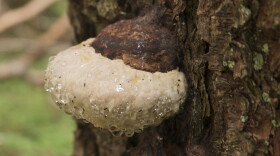 I started thinking about guttation on a hike at the end of summer. It was a humid day; it had rained almost nonstop the previous week and there was even more in the forecast.

-
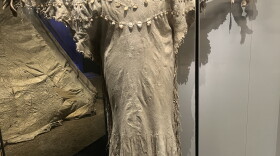 MTPR Hosts and Producers Keely Larson and Lauren Korn take a field trip to the newly renovated Montana Heritage Center.
 -
 This week on ‘The Write Question,’ the first of a two-part conversation with journalist Kevin Fedarko, author of ‘A Walk in the Park: The True Story of a Spectacular Misadventure in the Grand Canyon’ (Scribner). This conversation was recorded live at the Ravalli County Museum in Hamilton, Montana, in partnership with Chapter One Bookstore.
 -
 Host Lauren Korn speaks with NPR Health & Science correspondent Allison Aubrey, author of ‘Your Turn: How to Create a Midlife You Love’ (Avid Reader Press, Simon & Schuster).
 -
 Five new sculptures will find a home for a two-year installation at Silver Park in Missoula.
 -
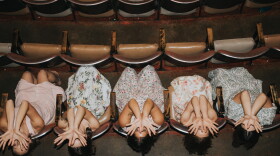 Two home company productions, a dance film festival, guest artists and youth programming are all in store at Missoula's Westside Theater for its 2026/2027 season.
 -
 Montana's oldest opera company takes on the beloved Norman Maclean classic with shows in both Bozeman and Missoula.


Subscribe wherever you listen.
-
 Hosted by Justin Angle
 -
 Hosted by Lauren Korn
 -
 Hosted by John Floridis
 -

-
 Hosted by Jay Kettering


