
Voting
The 2022 midterm elections are fast approaching and we’re here to answer your questions about voting in Montana.
Do you know how to vote, where to vote, and what you might need to have when you show up to the polls? What if your voter registration is out of date, or has a mistake, and you are challenged at the polls — what can you do? What do certain ballot measures mean for the great state of Montana?
_
MTPR is part of a new community-powered journalism project to answer those questions, and any other ones you may have about how to exercise your right to vote in the upcoming midterms. Our mission is to provide you with the information you need to vote — we’re not concerned about how you vote, or who you vote for, we just want to make sure you are armed with the information you need to vote.
-
 Montana PBSThe race to be Montana’s next U.S. senator is heating up in the final three weeks until election day. Recent polling shows Republican Kurt Alme has a comfortable lead in the four-way race. Meanwhile, independent Seth Bodnar and Democrat Alani Bankhead have hit the campaign trail hard trying to appeal to the same centrist and left-wing voters.
-
 Montana Public Radio (Flint); Forstag campaign (Forstag).The race for Montana’s western district House seat is tight. Recent polls show the two major candidates are tied with no clear lead. MTPR’s Clayton Murphy has this profile of the Democrat and Republican competing for the seat.
-
 Montana Public Service Commission/Montana Public Service CommissionThe Public Service Commission’s District 5 seat is up for election. Voters from the Blackfeet Indian Reservation to Helena and parts of Missoula will get to choose who represents them on the board. MTPR’s Clayton Murphy talks with Deputy Editor of the Daily Montanan Keila Szpaller about who’s running and what the race could mean for voters.
-
Montana Public Service Commission/Montana Public Service CommissionTwo candidates are vying for the open District 1 seat on the Public Service Commission. This district is the biggest in the state by land and covers much of eastern Montana, from the Rocky Boy’s Reservation to Glendive and Miles City. MTPR’s Clayton Murphy speaks with Keila Szpaller, deputy editor of the Daily Montanan, about the race and what this election may mean for Montanans.
-
 iStock/iStockMontana’s judicial elections are nonpartisan. An initiative to permanently keep it that way will appear on November’s ballot. Republican state legislators have tried unsuccessfully to make judicial elections partisan during recent legislative sessions.
-
 Shaylee RagarTwo judges from the same court are competing for a seat on the Montana Supreme Court. The justices spoke to MTPR’s Clayton Murphy about partisanship, restraint and what they would bring to the bench.
-
 Yellowstone Public RadioIt's been more than thirty years since Montanans elected a non-GOP candidate to the U.S. House of Representatives, and this year a Democrat, an Independent and a Libertarian are betting on a change.


-
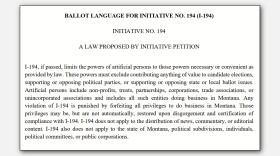 Montanans overwhelmingly supported a ballot measure that aims to make political spending more transparent. The effort is already facing a legal challenge.
-
 State employees will see big changes to their health care coverage next year. That includes increases to monthly premiums, deductibles and what workers pay per visit to the doctor’s office. The state needs to come up with roughly $70 million to cover state workers’ health care through next year.
-
 State health officials last week told lawmakers the rollout of work requirements for people on Medicaid is going well. Montana soft-launched Medicaid work requirements July 1, months ahead of the federal deadline to do so.
-
 Montana lawmakers have voted to subpoena the Secretary of State. They’re ordering a record of what private voter information the office has sent to the federal government.
-
 The governor has filled a utility commission seat left vacant after sexual harassment claims against the former commissioner. A judge has ruled that the Montana Republican Party’s new bylaws infringe on state primary elections. The Meta settlement over social media harms to minors will send at least $89 million to Montana.
-
 NorthWestern Energy must go back to the drawing board after state regulators said their 20-year proposal for providing electricity is “deficient.” The utility company has 30 days with an optional extension to return an edited plan.


