-
 MTPR visited two Bitterroot Valley classrooms last month where students were learning what it takes to raise rainbow trout and keep fisheries in good health. MTPR’s Austin Amestoy returned to Hamilton as the students released their trout into a local pond.
 -
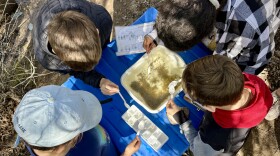 Along the banks of the Clark Fork River, students are identifying all kinds of “macro-invertebrates” — aka, bugs — that live in the river. The data is one clue scientists use to determine the health of a watershed, along with other indicators like appearance and chemical makeup.
 -
 More than six square miles of an aquifer under Montana’s Rocky Mountain Front has been removed from federal protections and slated for wastewater. The change comes despite overwhelming opposition from the local community.
 -
 The Roadless Rule is back on the chopping block. And what happens next could have really big implications for Montana, the region, and the country – for grizzlies, for other endangered species, and for entire ecosystems. What do we lose, or gain, when our bedrock environmental regulations go away, along with public input on how it all happens?
 -
 Trout Unlimited highlighted five towns across the country dedicated to improving water quality. At the top of their list was a small, southwestern Montana town - Philipsburg
 -
 About a third of Montana is public land. A new survey by the University of Montana’s Crown of the Continent and Greater Yellowstone Initiative suggests most Montanans want to keep it that way. Eighty-five percent of Montanans polled said they would support a ban on the sale or transfer of public land.
 -
 From the slopes of Whitefish, researchers are using ski resorts to gather valuable data – and seeds, that could help restore forests. In some regions of Montana, over 90 percent of whitebark pines have died.
 -
 The U.S. Forest Service wants to reserve timber harvests from three national forests in Montana for processing at local lumber mills. It’s relying on an 80-year-old law to do so. Montana Free Press environmental reporter Amanda Eggert has been following the plan for a “sustained yield” of timber from three national forests in Montana and joined MTPR’s Austin Amestoy with more.
 -
 The Trump administration plans to drastically restructure the U.S. Forest Service. The agency manages millions of acres across more than 150 national forests. MTPR's Sheri Quinn spoke with Rob Chaney, author and reporter at Mountain Journal, about what the reorganization spells for Montana and wildfire management.
 -
 Mining company executives interested in gold near Lincoln met with locals this week to discuss their exploration plans. Australian mining company, Sentinel Metals, has applied for a permit to drill 21 holes on private land just east of Lincoln, the first step in determining if there is enough gold to build a mine.

© 2026 MTPR
Play Live Radio
Next Up:
0:00
0:00
Available On Air Stations


