


Since 2001, American Prairie has worked to create the largest wildlife reserve in the lower 48. That plan includes grazing 900 head of bison on state and federal lands. But legal seesawing between land managers, government agencies and American Prairie has put that plan into limbo. MTPR’s Victoria Traxler sat down with the Billings Gazette Outdoors Editor Brett French to learn where things currently stand for American Prairie bison, and what may come next.
Victoria Traxler: Billings Gazette Outdoors Editor, Brett French, thanks so much for joining us today to share some of your reporting.
Brett French: Thanks, Victoria.
Victoria Traxler: Tracking the legal status of American Prairie's bison has been head spinning. What is the current status of those bison?
Brett French: So those bison are currently blissfully ignorant of what's going on. But the Bureau of Land Management has ordered them to leave seven federal grazing allotments in eastern Montana by the end of September. So chances are they may see some new movement, although that BLM order is being appealed by American Prairie.
Victoria Traxler: How do these grazing leases factor into American Prairie’s larger mission?
Brett French: When American Prairie has bought lands, ranches across eastern Montana, many of those parcels are tied to federal or state land when they're purchased so that the land owner has first right to those grazing leases.
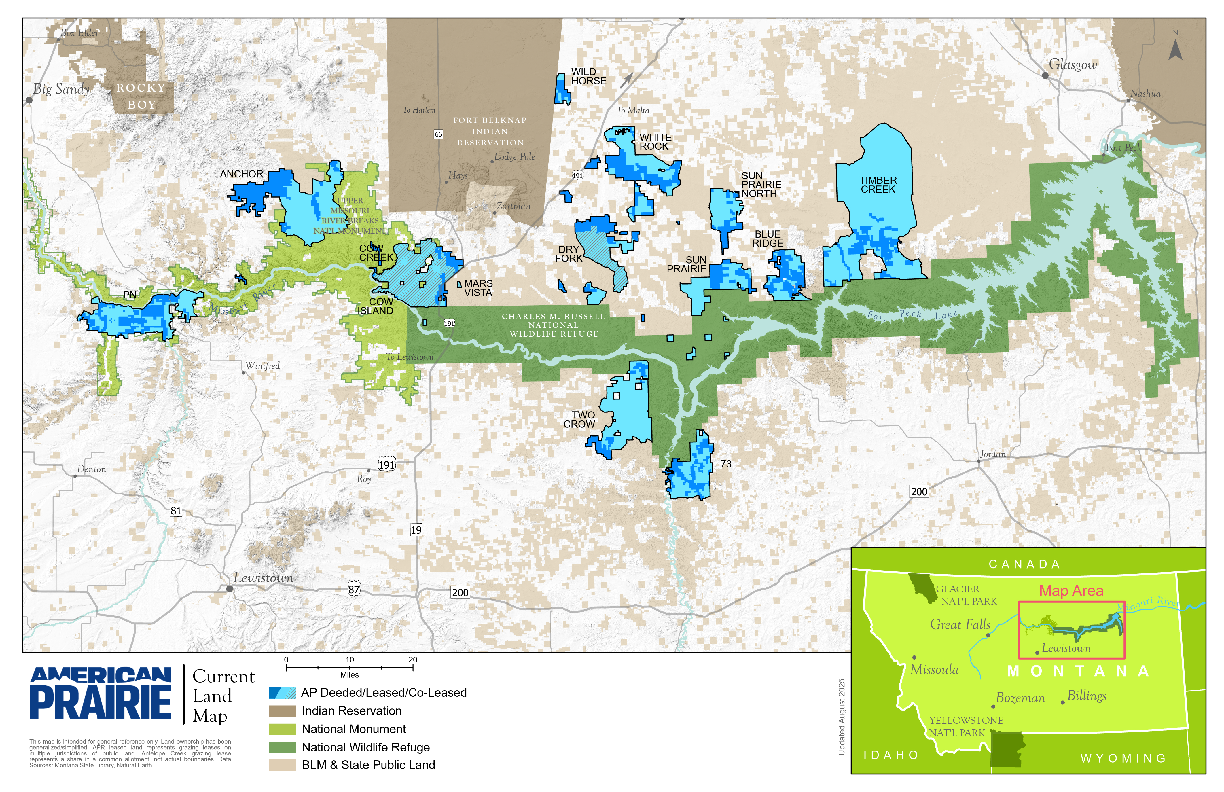
So out of the thousands of acres that American Prairie has now bought in northeastern Montana, only a portion of that, about 168,000, is deeded. So, that's land that they specifically own. Whereas another 436,000 acres is BLM or state land that they had planned on using for grazing bison.
Victoria Traxler: Can you walk us through that federal government decision this year to revoke the grazing permits for APRs bison?
Brett French: The BLM reversed its decision that the state office had made. The federal office stepped in to overturn the state ruling that had allowed the American Prairie to graze on seven federal leases. It was about 63,500 acres of BLM land and said that these bison are not production-oriented livestock. And they cited the Taylor Grazing Act of 1934 as the basis for that decision. The Taylor Grazing Act was passed to try and halt ecological damage to federal lands that were occurring during the Dust Bowl in places that were being overgrazed by sheep and cattle. But the BLM has attached this new definition and said the American Prairie bison do not meet that definition because they are mainly a conservation herd.
Victoria Traxler: What does that decision mean for others who manage bison populations on public lands?
Brett French: It’s interesting because the BLM said nobody else should worry, this is specifically directed at American Prairie.
Victoria Traxler: Now there's also litigation moving around state courts. Can you tell us the most recent update we have between American Prairie bison and state lands?
Brett French: One is American Prairies filed suit last year saying the Department of Natural Resources and Conservation, which manages grazing on state leases, had not processed their request to graze on two allotments in northeastern Montana for six years. DNRC said they were waiting for a decision from the BLM before acting. So, American Prairie took them to court, seeking to force them to conduct an environmental analysis as required under Montana Environmental Policy Act. They got a positive ruling in their favor from the judge that the DNRC has appealed. And so they're continuing on with doing the scoping for public comment and then they have 90 days to conduct the environmental analysis, but they're also appealing the original decision.
On another front, the state land board, at the beginning of the year, began a process to order the DNRC to rewrite its grazing lease rules, pulling bison out of the mix of livestock, and telling DNRC to rewrite the rules and not allow any bison grazing until those new rules are written. The DNRC has been told that it didn't give American Prairie enough time to comment on the proposed changes, so still kind of in a holding point for that, although DNRC has put out the proposed new regulations for comment.
Victoria Traxler: Why are the results of these decisions so important to others?
Brett French: This isn't a problem of bison consuming or damaging the habitat, which is why the Taylor Grazing Act was passed. This is a political fight between Republicans who see American Prairie as an elitist organization that is threatening the livelihoods of Montana ranchers.
American Prairie is a sponsor of Montana Public Radio. The MTPR Newsroom covers sponsors in the same way it reports on other companies.


